
As you gather classroom supplies, organize sports schedules, and complete back-to-school checklists, there is one essential tool for academic success that often gets overlooked: your child’s vision. Approximately 80 percent of everything a student learns in school is presented visually. From reading whiteboards to focusing on computer screens and textbooks, clear and comfortable vision is the bedrock of classroom learning. At Illinois Eye Associates, our family-focused optometric team is committed to providing comprehensive pediatric vision care for students in Manhattan and Illinois.
What Is the Difference Between a School Vision Screening and a Comprehensive Eye Exam?
A basic school vision screening only tests distance visual acuity, while a comprehensive eye exam evaluates eye teaming, focusing stamina, depth perception, and total ocular health. Screenings routinely miss functional vision problems that affect reading and classroom learning.
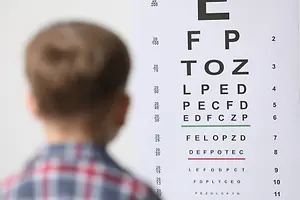
Many parents believe that if their child passes a simple eye chart screening at school or the pediatrician's office, their visual system is perfectly healthy. However, distance acuity (seeing 20/20 on a wall chart) is only one small aspect of sight. School screenings are not designed to detect how well a child's eyes work together as a team, how accurately they track across a line of text, or how comfortably they hold focus on a page.
A child can easily pass a 20/20 distance screening while still struggling with severe visual fatigue, double vision, or eye tracking bottlenecks that make reading painful and frustrating. A comprehensive examination at Illinois Eye Associates evaluates the full visual system to ensure your child has the stamina needed for a demanding school day.
How Do Hidden Vision Problems Impact Classroom Learning and Behavior?
Undiagnosed visual issues often cause children to avoid reading, lose their place on a page, or experience daily headaches. These challenges are frequently mistaken for learning difficulties or attention struggles.
When a child’s eyes do not track smoothly or team together correctly, reading requires immense physical effort. Instead of focusing on understanding the story or solving a math problem, the child’s brain has to work constantly just to keep the letters clear and single. This unnecessary strain leads to quick exhaustion, frustration, and behavioral avoidance in the classroom.
Children rarely complain about vision problems because they assume everyone sees the world the exact same way they do. Common signs that your student may be dealing with an hidden vision issue include:
- Holding books or digital tablets unusually close to their face
- Losing their place or using a finger to guide their eyes while reading
- Squinting, tilting their head, or covering one eye to focus
- Rubbing their eyes or complaining of headaches during homework time
- Short attention spans during visual tasks or avoiding reading altogether
What Happens During a Children's Eye Exam at Illinois Eye Associates?
Our pediatric eye exams combine evidence-based clinical diagnostic checks with a gentle, child-friendly approach. We evaluate visual sharpness, eye muscle coordination, spatial awareness, and internal ocular health.
At Illinois Eye Associates, we make sure young patients feel comfortable, safe, and engaged throughout their visit. Our optometrists assess key developmental visual skills, including binocular coordination (how the eyes align), accommodation (how quickly the eyes shift focus from near to far), and saccadic tracking (how accurately the eyes jump from word to word across a printed line).
We also inspect the physical health of the cornea, lens, and retina to catch any early signs of ocular health conditions. If your child requires prescription eyewear, our optical team will help them select durable, comfortable, and stylish frames that they will feel confident wearing in the classroom and on the playground.
How Can You Schedule Your Student's Back-to-School Exam in Manhattan?
You can schedule a comprehensive pediatric eye exam by contacting our local office in Manhattan or booking online before the late-summer appointment rush. Early booking ensures your child starts the school year with total visual clarity.
In Illinois, formal vision exams are required for children entering kindergarten or enrolling in public school for the first time. However, annual vision checks are highly recommended for every growing student as visual demands increase with each grade level.
Investing in your child’s eye health gives them the visual tools they need to read comfortably, participate confidently in class, and excel in youth sports. Our friendly team at Illinois Eye Associates is proud to serve families throughout Manhattan. You can easily check our location using (https://www.google.com/maps/search/?api=1&query=Google&query_place_id=ChIJN6tDtNdvDogRu33ceP9GmyU) or call us directly at (815) 863-8287. Give your student the advantage of clear vision this school year and Book a Back-to-School Eye Exam today.
Frequently Asked Questions About Back-to-School Eye Exams
At what age should a child have their first eye exam?
- The American Optometric Association recommends that infants receive their first comprehensive eye assessment between 6 and 12 months of age. Children should then have at least one additional exam between ages 3 and 5, followed by annual comprehensive exams once they begin school.
Are eye exams required for school entry in Illinois?
- Yes. Illinois state law requires proof of a comprehensive eye examination performed by a licensed optometrist or ophthalmologist for all children entering kindergarten or enrolling in an Illinois public school for the first time. The exam proof must be submitted by October 15th of the school year.
How can I tell if my child needs glasses if they haven't complained?
- Children often assume that blurry or double text is normal. Look for behavioral indicators like frequent eye rubbing, head tilting, sitting very close to the television, avoiding homework, or losing reading comprehension after only a few minutes of study.
Can sports safety eyewear be made with my child's prescription?
- Yes. We offer specialized, impact-resistant prescription sports goggles and protective eyewear designed to keep your young athlete's eyes safe during school sports and extracurricular activities while keeping their vision crisp and clear.